Trekking in Nepal
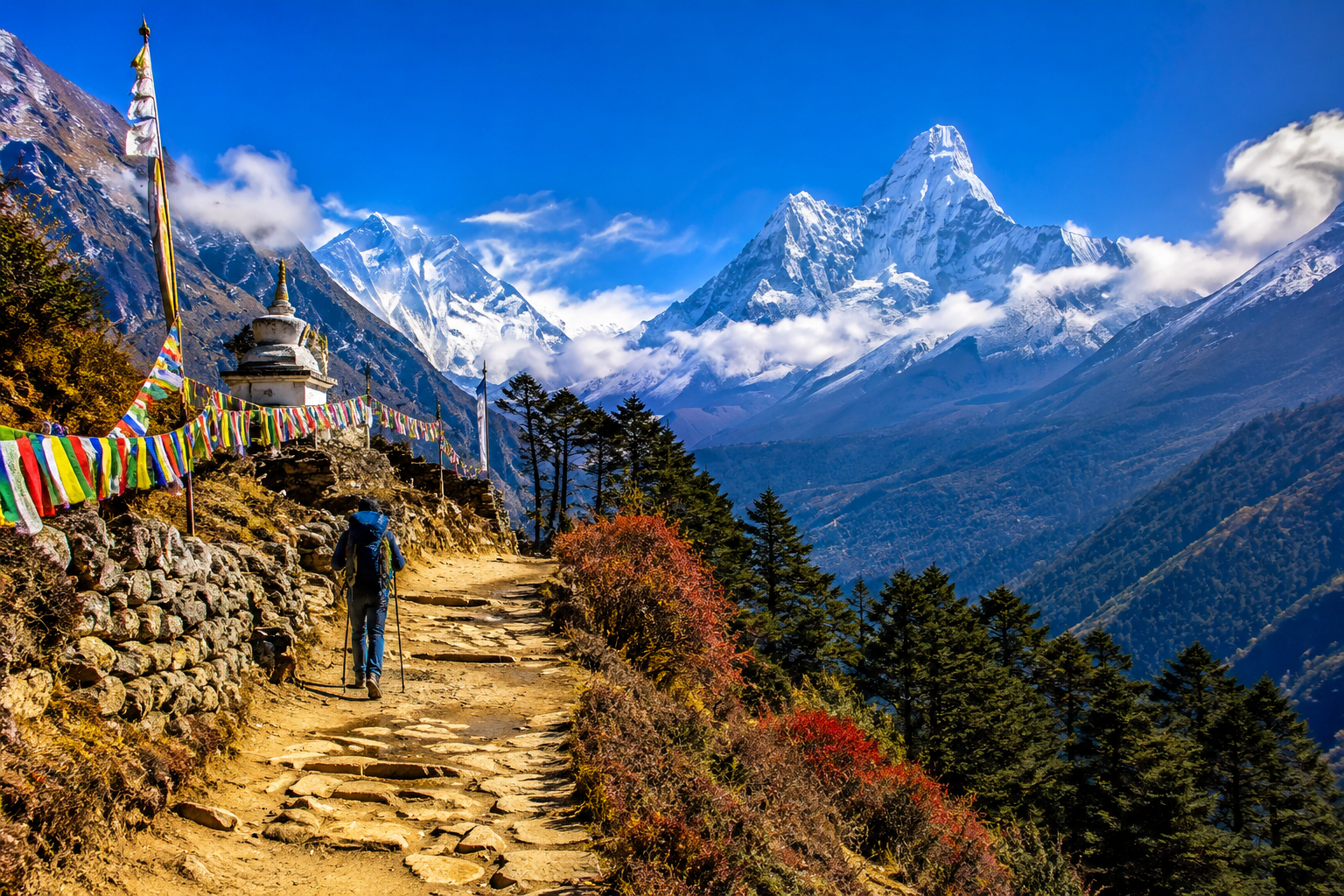
Nepal is widely recognized as the world's greatest trekking destination, attracting thousands of adventure enthusiasts, nature lovers, photographers, and mountain explorers from across the globe every year. Nestled in the heart of the Himalayas, Nepal is home to eight of the world's fourteen highest mountains, including the legendary Mount Everest (8,848.86m), making it a dream destination for trekkers seeking breathtaking landscapes, cultural experiences, and unforgettable adventures. From the famous Everest Base Camp Trek and Annapurna Circuit Trek to the remote trails of Manaslu, Langtang, Mustang, and Kanchenjunga, Nepal offers trekking experiences that cannot be found anywhere else in the world.
What makes Nepal truly special is its extraordinary combination of natural beauty, cultural diversity, and adventure opportunities. Trekkers can walk through lush forests, traditional mountain villages, terraced farmlands, alpine meadows, glacial valleys, high mountain passes, and spectacular Himalayan viewpoints all within a single journey. Along the trails, visitors encounter diverse ethnic communities such as the Sherpa, Gurung, Tamang, Rai, Thakali, and Tibetan-influenced cultures, providing a unique opportunity to experience authentic local traditions, ancient monasteries, colorful festivals, and warm Himalayan hospitality.
Unlike many trekking destinations around the world, Nepal offers routes suitable for every level of traveler. Whether you are looking for a short scenic trek, a challenging high-altitude adventure, a luxury lodge trek, or a remote wilderness expedition, Nepal has something for everyone. The country's well-established trekking infrastructure, experienced guides, comfortable teahouses, and stunning mountain scenery make it one of the safest and most rewarding trekking destinations on Earth.
At Golden Tibet Travel, we believe Nepal offers far more than just mountain trekking. It is a journey through some of the most spectacular landscapes, rich cultures, and inspiring environments in the world. Whether your dream is to stand beneath Mount Everest, witness sunrise over the Annapurna Range, explore the hidden valleys of Manaslu, or immerse yourself in the peaceful beauty of Langtang, Nepal delivers life-changing experiences that remain with travelers forever. This is why Nepal continues to be celebrated as the ultimate trekking destination and the true gateway to the Himalayas
 .
.
Top 4 Trekking Trails in Nepal :
Nepal is home to some of the most spectacular trekking routes on Earth. From the towering peaks of Everest to the remote valleys of Manaslu, every trail offers a unique combination of Himalayan scenery, cultural encounters, mountain adventure, and unforgettable experiences. These world-famous trekking routes are the main reason why Nepal continues to be recognized as the World's Greatest Trekking Destination.
Everest Base Camp Trek – The World's Most Iconic Trek
The Everest Base Camp Trek is widely regarded as the most iconic trekking adventure on the planet and stands as the ultimate dream journey for mountain lovers, adventure seekers, and outdoor enthusiasts. Located in the heart of Nepal's legendary Khumbu Region, this world-famous trek takes travelers deep into the land of the Sherpas, offering an unforgettable opportunity to stand beneath the majestic Mount Everest (8,848.86m), the highest mountain on Earth. Every year, thousands of trekkers from around the world visit Nepal to experience this extraordinary Himalayan adventure, making it one of the most sought-after trekking routes in the world.
The journey begins with a thrilling mountain flight to Lukla, often considered one of the world's most scenic airports. From there, the trail winds through beautiful Sherpa villages, suspension bridges decorated with colorful prayer flags, dense rhododendron forests, and ancient Buddhist monasteries. Trekkers pass through famous destinations such as Phakding, Namche Bazaar, Tengboche, Dingboche, Lobuche, and Gorakshep, each offering unique cultural experiences and breathtaking mountain scenery. Along the way, visitors gain insight into the rich traditions, hospitality, and spiritual heritage of the Sherpa people, who have lived in the Everest region for generations.
One of the most rewarding highlights of the trek is reaching Kala Patthar (5,545m), widely regarded as the best viewpoint in the Everest region. From its summit, trekkers are rewarded with panoramic views of Mount Everest, Lhotse, Nuptse, Ama Dablam, Pumori, Thamserku, and countless snow-capped Himalayan peaks. The spectacular sunrise and sunset views over the Himalayas create memories that last a lifetime and offer some of the finest mountain photography opportunities in the world.
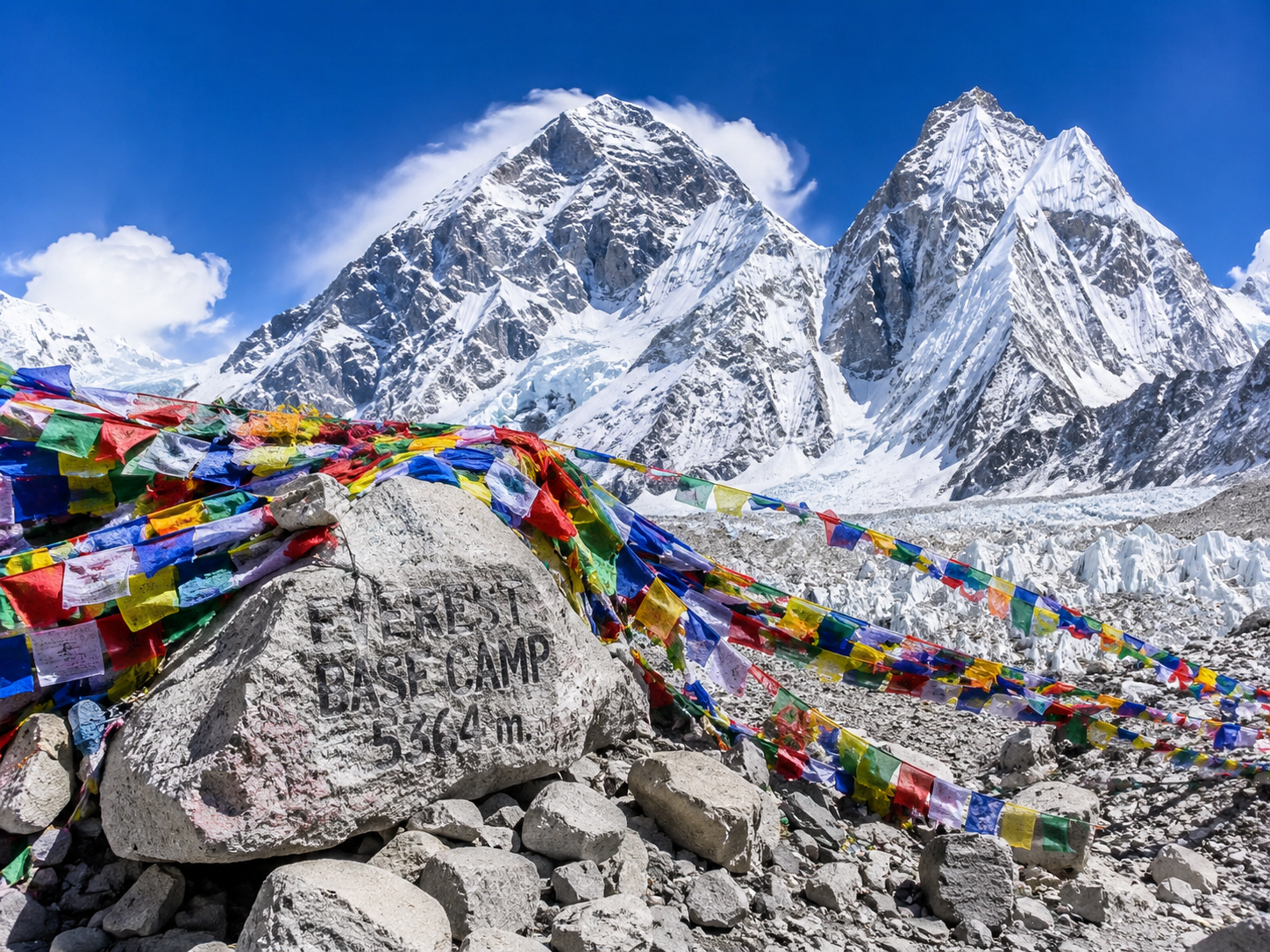
The ultimate destination, Everest Base Camp (5,364m), is a place that inspires adventurers from every corner of the globe. Standing at the base of the world's highest mountain is a truly emotional and unforgettable achievement. Surrounded by towering glaciers, dramatic icefalls, and magnificent Himalayan scenery, trekkers experience a profound sense of accomplishment and connection with one of the most remarkable landscapes on Earth.
Best Scenic Highlights of the Everest Base Camp Trek
The Everest Base Camp Trek is not only about reaching the base of the world's highest mountain; it is also about experiencing some of the most spectacular landscapes on Earth. From dramatic mountain panoramas and ancient monasteries to vibrant Sherpa villages and glacial valleys, every day on the trail offers unforgettable scenery. Here are some of the most beautiful highlights that make the Everest region one of the world's greatest trekking destinations.
Namche Bazaar – The Gateway to Everest
Nestled at an altitude of 3,440 meters, Namche Bazaar is the vibrant heart of the Khumbu region and the most famous Sherpa town in Nepal. Surrounded by towering Himalayan peaks, this colorful mountain settlement offers breathtaking views of Kongde Ri, Thamserku, and Mount Everest on clear days. Trekkers can explore traditional markets, cozy cafés, museums, and scenic viewpoints while acclimatizing before heading higher into the mountains.
Tengboche Monastery – The Spiritual Heart of Everest
Located at 3,867 meters, Tengboche Monastery is one of the most scenic and spiritual locations in the Everest region. Set against the stunning backdrop of Ama Dablam, Everest, Nuptse, and Lhotse, the monastery offers incredible photography opportunities and a peaceful atmosphere. Watching Buddhist monks perform traditional prayers while surrounded by the Himalayas is one of the most memorable experiences of the trek.
Kala Patthar – The Best Everest Viewpoint
Standing at 5,545 meters, Kala Patthar is considered the finest viewpoint in the Everest region. From its summit, trekkers enjoy breathtaking panoramic views of Mount Everest, Pumori, Nuptse, Lhotse, Lingtren, and Khumbutse. The sunrise and sunset views from Kala Patthar are legendary and provide some of the most iconic mountain photography opportunities anywhere in the Himalayas.
Everest Base Camp and Khumbu Glacier
The ultimate highlight of the trek is reaching Everest Base Camp (5,364 meters) itself. Standing beside the massive Khumbu Glacier and beneath the towering Himalayan giants is an unforgettable achievement. The dramatic ice formations, glacial landscapes, colorful expedition tents during climbing season, and views of the Khumbu Icefall create a truly extraordinary mountain experience that few places on Earth can match.
Here are some FAQs about the Everest Base camp treks.
How difficult is the Everest Base Camp Trek?
The Everest Base Camp Trek is considered a moderate to challenging trek. No technical climbing skills are required, but trekkers should have a reasonable level of fitness. Daily walking typically ranges from 5 to 8 hours, with high altitudes being the biggest challenge.
What is the best time to do the Everest Base Camp Trek?
The best seasons are Spring (March to May) and Autumn (September to November). During these months, trekkers enjoy clear mountain views, stable weather, comfortable temperatures, and ideal trekking conditions throughout the Everest region.
How many days are needed for the Everest Base Camp Trek?
Most Everest Base Camp treks require 12 to 14 days, including acclimatization days in Namche Bazaar and Dingboche. These rest days are essential for safely adjusting to the high altitude and increasing the chances of a successful trek.
Why is the Everest Base Camp Trek so famous?
The Everest Base Camp Trek is famous because it takes trekkers to the foot of Mount Everest, the highest mountain in the world. Along the way, travelers experience spectacular Himalayan scenery, Sherpa culture, ancient monasteries, suspension bridges, glacial landscapes, and some of the most breathtaking mountain views on Earth, making it one of the world's ultimate trekking adventures.
Annapurna Circuit Trek – The Most Diverse Trek in Nepal
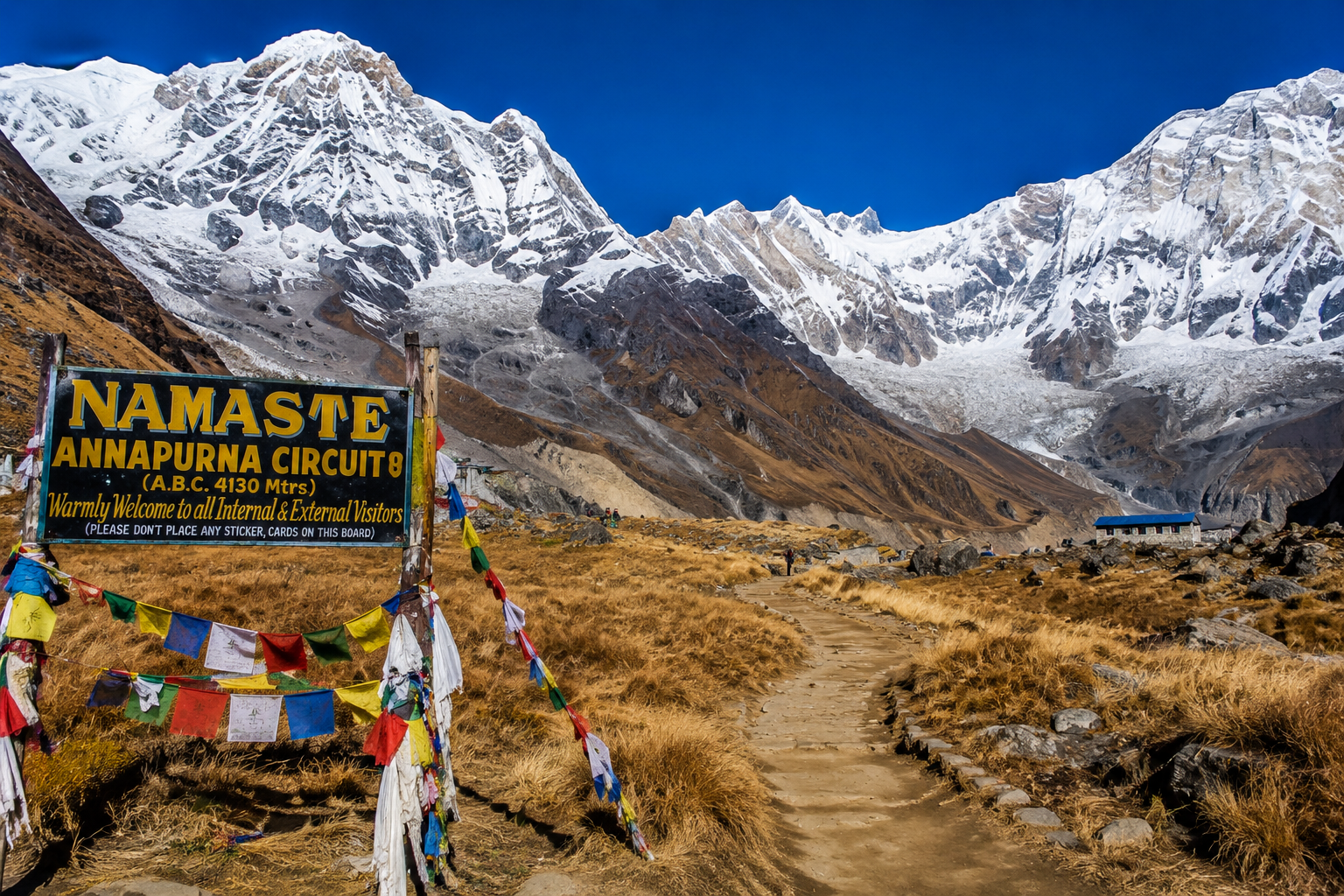
The Annapurna Circuit Trek is widely recognized as one of the most diverse and spectacular trekking adventures in the world. Located in the heart of the Nepal Himalayas, this legendary trail circles the magnificent Annapurna Massif, taking trekkers through an incredible variety of landscapes, cultures, climates, and mountain scenery. From lush subtropical forests and terraced farmlands to alpine meadows, deep river gorges, high mountain deserts, and snow-covered mountain passes, the Annapurna Circuit offers an experience unlike any other trekking route in Nepal.
The trek typically ranges between 12 to 18 days and passes through traditional villages inhabited by Gurung, Thakali, and Manangi communities, allowing trekkers to experience Nepal's rich cultural diversity. One of the major highlights is crossing the famous Thorong La Pass (5,416m), one of the highest trekking passes in the world. Throughout the journey, trekkers are rewarded with breathtaking views of Annapurna I (8,091m), Dhaulagiri (8,167m), Manaslu (8,163m), Tilicho Peak, Gangapurna, and Machhapuchhre (Fishtail Mountain).
The Annapurna Circuit Trek combines stunning natural beauty, authentic Himalayan culture, comfortable teahouse accommodations, and unforgettable mountain adventures. Whether you're an experienced trekker or a first-time visitor to Nepal, this iconic trail perfectly demonstrates why Nepal is considered the world's greatest trekking destination.
Best Scenic Highlights of the Annapurna Circuit Trek:
Manang Village – The Jewel of the Annapurna Region
Situated at an altitude of 3,519 meters, Manang is one of the most beautiful mountain villages in Nepal. Surrounded by dramatic Himalayan peaks, glaciers, and rugged landscapes, Manang offers stunning views of Annapurna III, Gangapurna, Tilicho Peak, and Chulu East. It is also an important acclimatization stop before crossing Thorong La Pass.
Tilicho Lake – One of the World's Highest Lakes
Located at approximately 4,919 meters, Tilicho Lake is one of the most breathtaking natural wonders in the Himalayas. Its crystal-clear turquoise waters reflect the surrounding snow-capped peaks, creating one of Nepal's most spectacular mountain landscapes. The side trip to Tilicho Lake is considered one of the highlights of the Annapurna region.
Thorong La Pass – The Ultimate Himalayan Challenge
The crossing of Thorong La Pass (5,416m) is the most iconic moment of the Annapurna Circuit Trek. From the summit, trekkers enjoy panoramic views of the Annapurna Range, Dhaulagiri Range, Mustang Valley, and the Tibetan Plateau. Standing atop one of the world's highest trekking passes is a truly unforgettable achievement.
Muktinath Temple – Sacred Pilgrimage Site
After crossing Thorong La Pass, trekkers descend to the sacred pilgrimage site of Muktinath. Revered by both Hindus and Buddhists, Muktinath is famous for its eternal flame, ancient temples, and spiritual significance. The surrounding landscapes of Mustang create a unique contrast to the lush valleys seen earlier in the trek.
Kali Gandaki Gorge – The Deepest Gorge in the World
The Annapurna Circuit follows sections of the Kali Gandaki Valley, located between Annapurna and Dhaulagiri. Often described as the world's deepest gorge, this dramatic landscape offers incredible mountain scenery, traditional villages, apple orchards, and stunning photography opportunities.
How difficult is the Annapurna Circuit Trek?
The Annapurna Circuit Trek is considered a moderate to challenging trek. Trekkers should be physically fit and prepared for long walking days and high-altitude conditions, particularly while crossing Thorong La Pass at 5,416 meters.
What is the best time to do the Annapurna Circuit Trek?
The best seasons are Spring (March to May) and Autumn (September to November). These months offer clear mountain views, stable weather, comfortable temperatures, and excellent trekking conditions throughout the Annapurna region.
How many days does the Annapurna Circuit Trek take?
Most trekkers complete the Annapurna Circuit Trek in 12 to 18 days, depending on the chosen route, acclimatization schedule, and side trips such as Tilicho Lake.
Is Thorong La Pass dangerous?
Thorong La Pass is safe when trekkers follow proper acclimatization schedules and trek with experienced guides. Altitude sickness can be a challenge, which is why gradual ascent and adequate rest are extremely important.
Why is the Annapurna Circuit Trek famous worldwide?
The Annapurna Circuit Trek is famous for its incredible diversity. Few trekking routes in the world offer such a remarkable combination of Himalayan mountain views, cultural experiences, high mountain passes, sacred pilgrimage sites, remote villages, and changing landscapes. This diversity makes it one of the greatest trekking adventures on Earth.
Langtang Valley Trek – The Hidden Gem of the Himalayas
The Langtang Valley Trek is one of Nepal's most beautiful and rewarding trekking adventures, often referred to as the "Hidden Gem of the Himalayas." Located within Langtang National Park, just north of Kathmandu and close to the Tibetan border, this spectacular trekking route offers an incredible combination of breathtaking mountain scenery, rich Tamang culture, ancient Buddhist heritage, lush forests, alpine meadows, and dramatic glacier landscapes. Unlike some of Nepal's busier trekking regions, Langtang provides a peaceful and authentic Himalayan experience, making it an ideal choice for trekkers seeking natural beauty and cultural immersion away from large crowds.
The journey begins with a scenic drive from Kathmandu to Syabrubesi before entering the pristine Langtang Valley. Trekkers pass through dense forests filled with rhododendrons, bamboo groves, waterfalls, and diverse wildlife, including red pandas, Himalayan black bears, and numerous bird species. Along the trail, visitors encounter traditional Tamang villages, colorful prayer wheels, ancient monasteries, and warm local hospitality that reflect the region's strong Tibetan Buddhist influence.
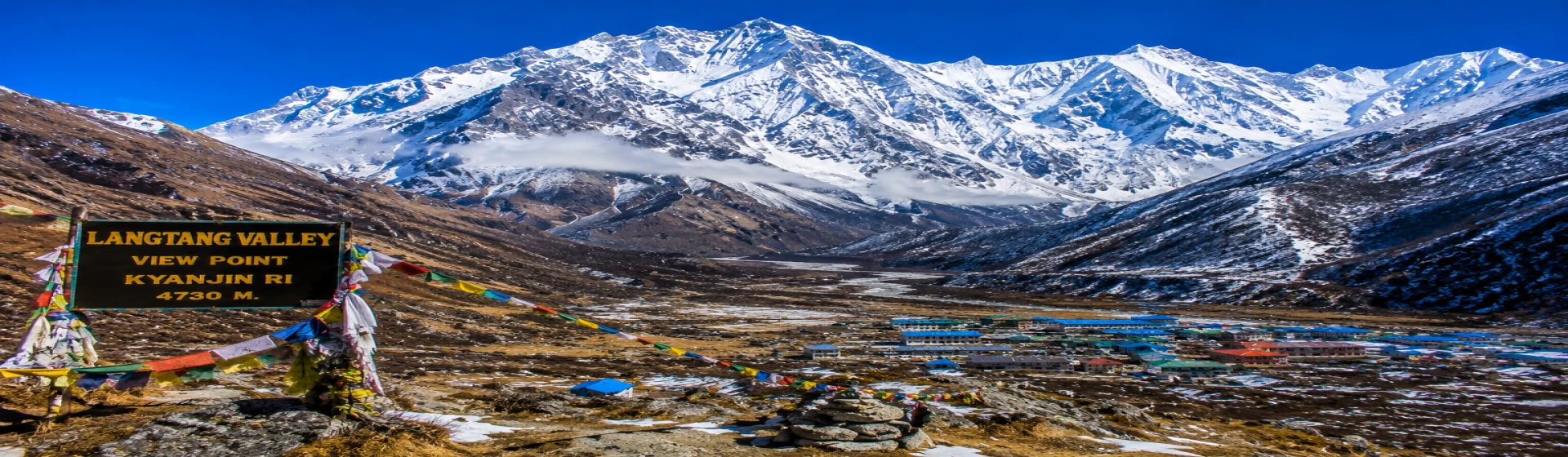
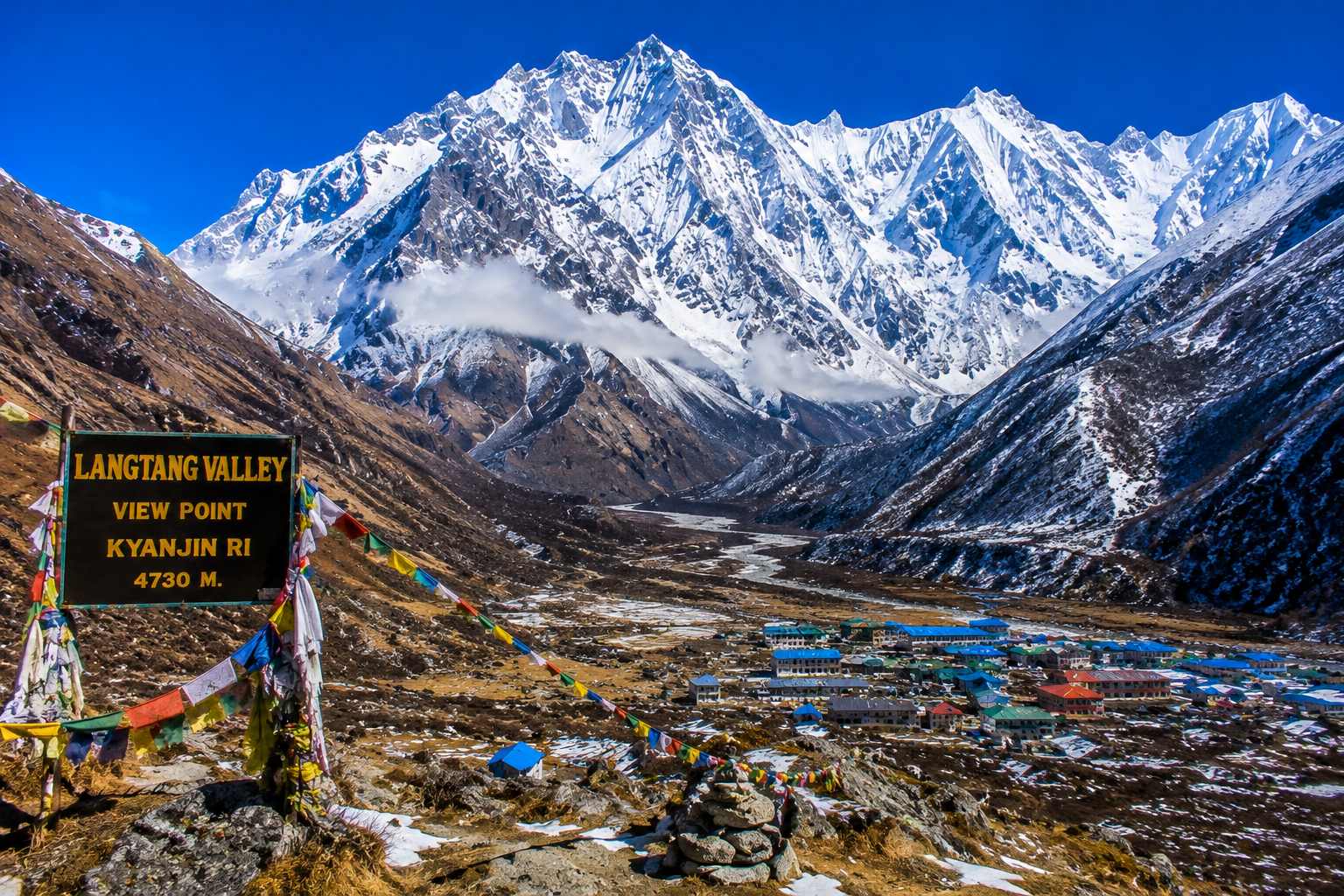
One of the greatest highlights of the trek is reaching Kyanjin Gompa (3,870m), a beautiful mountain settlement surrounded by snow-capped Himalayan peaks. From here, trekkers can explore nearby glaciers, visit traditional cheese factories, and climb scenic viewpoints such as Kyanjin Ri (4,773m) and Tserko Ri (5,000m) for panoramic views of Langtang Lirung (7,227m), Dorje Lakpa, Gangchempo, Yala Peak, and countless Himalayan giants. The stunning landscapes and peaceful atmosphere make Langtang one of Nepal's most underrated trekking destinations.
Best Scenic Highlights of the Langtang Valley Trek
Langtang National Park – Nepal's First Himalayan National Park
The trek passes through the spectacular Langtang National Park, home to diverse ecosystems, pristine forests, rare wildlife, and stunning mountain landscapes. Trekkers walk through rhododendron forests, bamboo groves, rivers, waterfalls, and high-altitude meadows while enjoying some of Nepal's most beautiful natural scenery.
Langtang Village – Heart of the Valley
Located deep within the Langtang Valley, Langtang Village offers incredible mountain views and rich cultural experiences. Surrounded by towering peaks and traditional stone houses, the village provides a unique opportunity to experience authentic Tamang culture and Himalayan mountain life.
Kyanjin Gompa – The Crown Jewel of Langtang
The beautiful settlement of Kyanjin Gompa is the highlight of the trek. Surrounded by glaciers and towering Himalayan peaks, this peaceful mountain village is home to an ancient Buddhist monastery and one of Nepal's highest cheese factories. The scenery here is simply breathtaking.
Kyanjin Ri – The Best Viewpoint in Langtang
For many trekkers, the climb to Kyanjin Ri (4,773m) is the most rewarding part of the journey. From the summit, visitors enjoy panoramic views of Langtang Lirung, Yala Peak, Dorje Lakpa, Gangchempo, glaciers, and the entire Langtang Valley. Sunrise and sunset views from Kyanjin Ri are unforgettable.
Tserko Ri – A Himalayan Panorama Like No Other
Standing at approximately 5,000 meters, Tserko Ri offers one of the most spectacular mountain viewpoints in Nepal. Trekkers are rewarded with breathtaking 360-degree views of snow-capped Himalayan peaks, glaciers, and remote mountain landscapes stretching into Tibet.
How difficult is the Langtang Valley Trek?
The Langtang Valley Trek is considered a moderate trek suitable for beginners with a reasonable level of fitness. Daily walking generally ranges between 5 and 7 hours, making it one of Nepal's most accessible Himalayan treks.
What is the best time to do the Langtang Valley Trek?
The best seasons are Spring (March–May) and Autumn (September–November) when trekkers can enjoy clear mountain views, comfortable temperatures, blooming rhododendrons, and excellent trekking conditions.
How many days are required for the Langtang Valley Trek?
Most trekkers complete the Langtang Valley Trek in 7 to 10 days, making it one of the best short Himalayan treks in Nepal for travelers with limited time.
What mountains can be seen during the Langtang Trek?
The trek offers magnificent views of Langtang Lirung, Dorje Lakpa, Gangchempo, Yala Peak, Naya Kanga, and several Tibetan Himalayan peaks, creating some of the most beautiful mountain scenery in Nepal.
Why is the Langtang Valley Trek called the Hidden Gem of the Himalayas?
Langtang is called the Hidden Gem of the Himalayas because it combines stunning mountain scenery, authentic local culture, ancient Buddhist traditions, glacier landscapes, and fewer crowds than Everest or Annapurna, offering a peaceful and highly rewarding trekking experience.
Manaslu Circuit Trek – Nepal's Best Remote Adventure
The Manaslu Circuit Trek is one of Nepal's most spectacular and rewarding trekking routes, offering an authentic Himalayan experience far from the crowds of Everest and Annapurna. Circling the majestic Mount Manaslu (8,163m), the eighth-highest mountain in the world, this incredible journey takes trekkers through remote mountain villages, deep river gorges, ancient Buddhist monasteries, pristine forests, and breathtaking high-altitude landscapes. Known as Nepal's best remote trekking adventure, the Manaslu Circuit perfectly combines natural beauty, cultural richness, and true wilderness exploration.
Located in the restricted Manaslu region of north-central Nepal, the trek follows ancient Himalayan trade routes that have connected Nepal and Tibet for centuries. Along the trail, trekkers encounter traditional Gurung and Tibetan-influenced communities, colorful prayer flags, mani walls, chortens, and centuries-old monasteries that showcase the region's deep spiritual heritage. The journey passes through picturesque villages such as Machha Khola, Jagat, Namrung, Lho, Samagaun, and Samdo, each offering unique cultural experiences and spectacular mountain views.
The highlight of the trek is crossing the legendary Larke Pass (5,106m), one of Nepal's most beautiful and rewarding mountain passes. From the summit, trekkers are treated to breathtaking panoramic views of Mount Manaslu, Himlung Himal, Cheo Himal, Kang Guru, Annapurna II, and numerous Himalayan peaks. The combination of dramatic landscapes, remote trails, authentic culture, and stunning mountain scenery makes the Manaslu Circuit one of the finest trekking experiences in the Himalayas.
At Utmost Destination, we consider the Manaslu Circuit Trek one of Nepal's greatest hidden treasures. For travelers seeking adventure, solitude, cultural immersion, and extraordinary Himalayan scenery, this trek offers a once-in-a-lifetime journey into one of Nepal's most untouched mountain regions.
Best Scenic Highlights of the Manaslu Circuit Trek
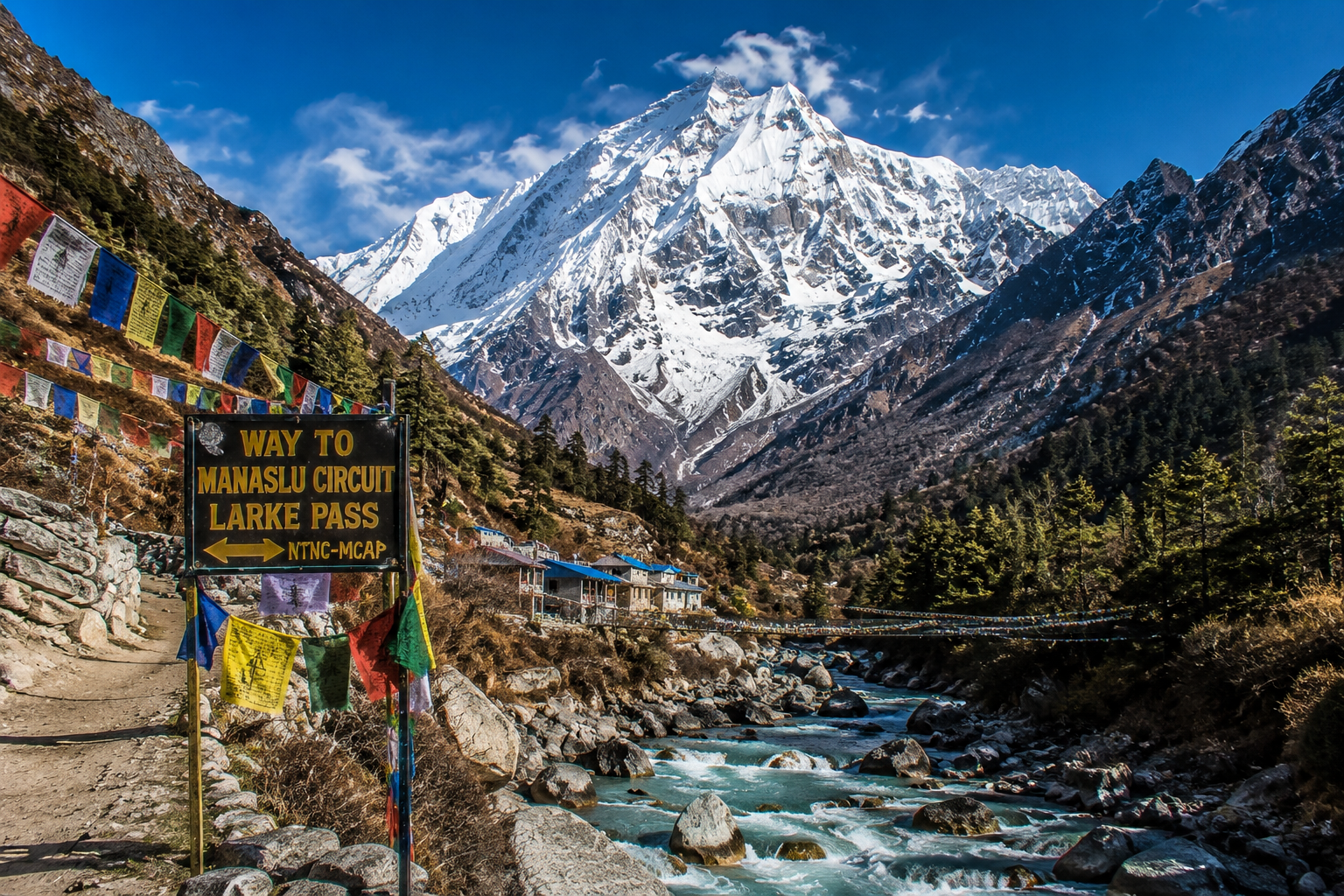
Samagaun – The Heart of the Manaslu Region
Situated beneath the towering slopes of Mount Manaslu, Samagaun (3,530m) is one of the most beautiful villages in the Himalayas. Surrounded by glaciers, alpine landscapes, and snow-capped peaks, this traditional Tibetan-style settlement offers incredible mountain views and authentic cultural experiences. It is also the primary acclimatization stop for trekkers before heading higher into the mountains.
Manaslu Base Camp Viewpoint
One of the most rewarding side trips during the trek is the hike to Manaslu Base Camp. The route offers close-up views of the massive Manaslu Glacier and breathtaking panoramas of Mount Manaslu itself. The dramatic ice formations, rugged terrain, and surrounding peaks create one of the most spectacular mountain landscapes in Nepal.
Birendra Lake – A Hidden Himalayan Gem
Located near Samagaun, Birendra Lake is a stunning glacial lake surrounded by towering mountains and glaciers. Its crystal-clear turquoise waters reflect the surrounding Himalayan scenery, making it one of the most photogenic locations in the entire Manaslu region.
Larke Pass – The Ultimate Himalayan Crossing
At 5,106 meters, Larke Pass is the highest and most challenging point of the trek. The panoramic views from the summit are simply breathtaking, featuring snow-covered peaks, glaciers, alpine valleys, and endless Himalayan horizons. Crossing Larke Pass is considered one of Nepal's greatest trekking achievements.
Pungyen Gompa – A Scenic Monastery Beneath Manaslu
The ancient Pungyen Gompa sits in a spectacular location overlooking glaciers and mountain peaks. This peaceful monastery offers incredible views of Mount Manaslu and provides a unique opportunity to experience the region's spiritual and cultural traditions.
How difficult is the Manaslu Circuit Trek?
The Manaslu Circuit Trek is considered a moderate to challenging trek. Trekkers should have a good level of fitness as the route involves long walking days, high-altitude terrain, and crossing Larke Pass at 5,106 meters.
What is the best time to trek the Manaslu Circuit?
The best seasons are Spring (March to May) and Autumn (September to November). During these months, trekkers enjoy clear mountain views, stable weather, and excellent trekking conditions throughout the Manaslu region.
Do I need a special permit for the Manaslu Circuit Trek?
Yes. The Manaslu region is a restricted area, and trekkers require a Manaslu Restricted Area Permit, Manaslu Conservation Area Permit (MCAP), and Annapurna Conservation Area Permit (ACAP). Trekkers must also travel with a licensed guide.
Why is the Manaslu Circuit Trek famous?
The Manaslu Circuit Trek is famous for its remote wilderness, authentic Tibetan culture, breathtaking mountain scenery, fewer crowds, and the spectacular crossing of Larke Pass. It is often regarded as one of Nepal's best alternatives to the Annapurna Circuit.
What mountains can be seen on the Manaslu Circuit Trek?
Trekkers enjoy magnificent views of Mount Manaslu (8,163m), Himlung Himal, Cheo Himal, Kang Guru, Annapurna II, Ganesh Himal, and several Tibetan Himalayan peaks, creating some of the most dramatic mountain scenery in Nepal.
Conclusion: Why Nepal Truly Is the World's Greatest Trekking Destination
Nepal is more than just a trekking destination—it is the ultimate gateway to the Himalayas and a dream destination for adventurers from around the world. From the legendary Everest Base Camp Trek, the diverse landscapes of the Annapurna Circuit, the hidden beauty of the Langtang Valley, and the remote wilderness of the Manaslu Circuit, every trail offers a unique combination of breathtaking mountain scenery, rich cultural heritage, authentic local experiences, and unforgettable adventures. No other country on Earth offers such an incredible variety of trekking routes within a single destination.
What truly makes Nepal special is the opportunity to walk among the world's highest mountains while experiencing the warm hospitality of local communities, ancient Buddhist traditions, colorful prayer flags, sacred monasteries, and spectacular Himalayan landscapes. Whether you are a first-time trekker, an experienced mountaineer, a nature lover, or a photography enthusiast, Nepal provides life-changing experiences that remain in your heart long after the journey ends.
At Golden Tibet Travel, we are passionate about helping travelers discover the very best of Nepal's trekking regions through carefully crafted itineraries, professional guides, personalized service, and authentic Himalayan experiences. From short scenic hikes to challenging high-altitude adventures, our goal is to create journeys that inspire, challenge, and reward every traveler.
If you are searching for the perfect trekking holiday filled with adventure, culture, natural beauty, and unforgettable mountain views, there is no better place than Nepal. The Himalayas are calling, and your next great adventure begins here. Let Utmost Destination guide you through the trails, mountains, villages, and hidden wonders that make Nepal the World's Greatest Trekking Destination.
Start your Himalayan journey today and experience the magic of Nepal—one step at a time